LLC Tax PreparationTwo returns, one profit
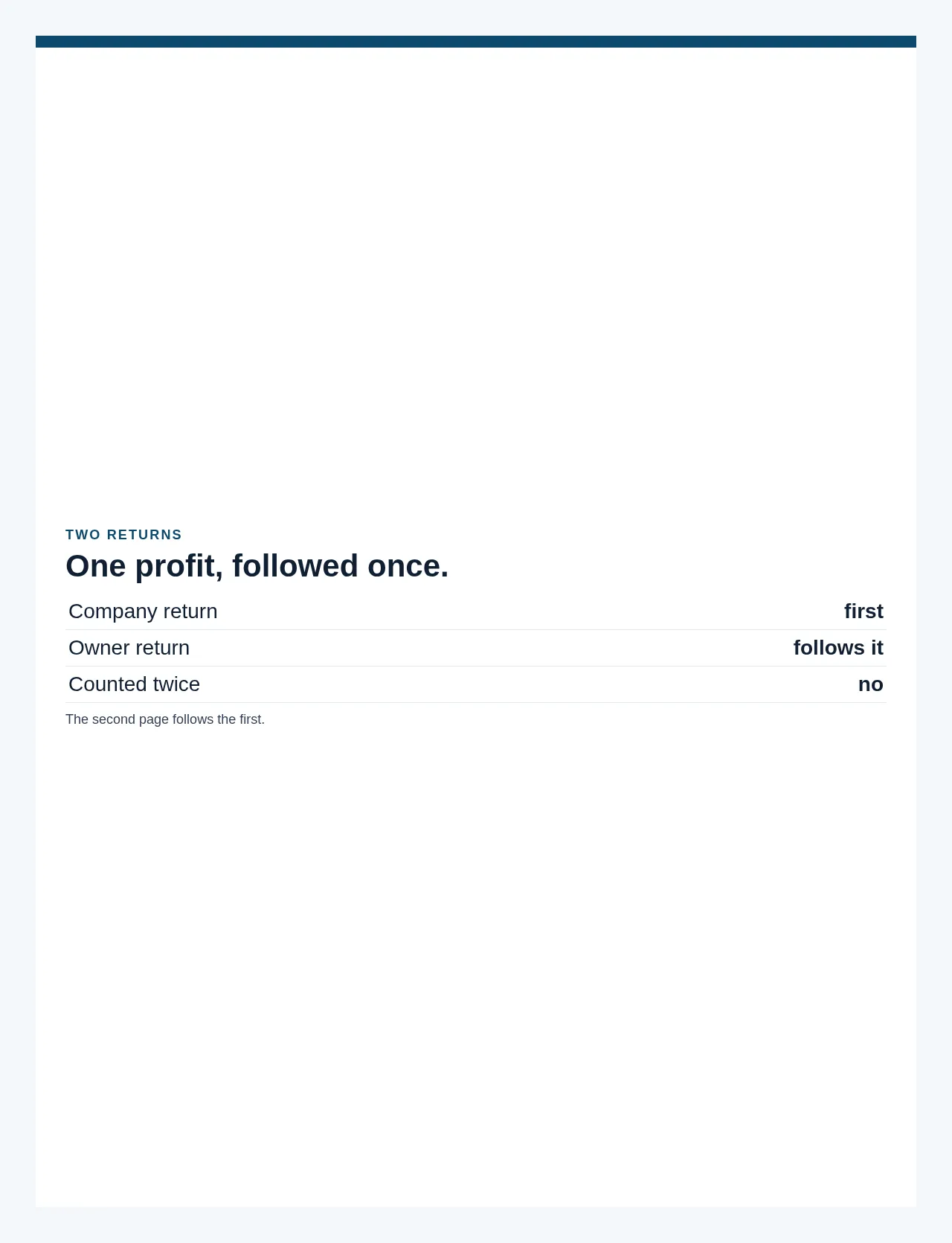
The company return and your own return are often both real. The profit should land on one of them in a way the other can follow, not on both and not on neither.
Where a disregarded company lands
When the company is disregarded, there is no separate federal income tax return for the company. A disregarded company's profit shows up among the owner's own tax items. People still say the company return when they mean the worksheet that feeds the owner return. We will use the precise name so a payment does not get applied to a return that does not exist.
The books of the company still matter. The owner return cannot invent a profit the books do not support, and it should not omit one the books do. A closed month is the bridge. Without it, the owner return is a story about the company rather than a report of it.
Where a partnership or an S corporation lands
A partnership files its own return and gives each owner a K-1. An S corporation does the same with its own form. The K-1 is the page that moves profit, loss, and certain other items onto the owner return. If we prepare only the owner return, we need the K-1 in hand. If we prepare the company return, the K-1 is one of the pages we produce.
Mixing the two is the usual error. An owner reports the profit from the bank app and also reports the K-1, and the profit is taxed twice. Or the owner assumes the company return covered it and reports nothing, and the profit drops. We draw the path on one page before any software is opened, so both of us can see which number moves and which number stays.
Owner wages, if the S election calls for them, are not the K-1. They are a W-2 from the provider you run. The return set is then three papers, not two. Leaving wages off because they feel like a distribution is how reasonable pay gets missed. We separate them in the month they are paid.
Estimates sit beside both
Estimates are payments toward your own tax for the current year. They are not a third copy of the company profit. After the company return and the owner return for last year are done, we look at the current closed months and reset what the next voucher should be. The dates most calendar year owners share are April, June, September, and January.
A voucher copied from last year is fine only while this year still resembles last year. A new contract, a lost customer, or a first year of wages changes it. Bring both returns if you have them, and bring the last voucher you paid. We will say which one is driving the number.
Name which return you hold
You will be talking to the Steven Palmieri practice.